Europe needs immigrants more than immigrants need Europe. Portugal needs immigrants more than we need Portugal. Canada needs immigrants more than immigrants need Canada. In fact, globally speaking, everywhere except Africa will be in steep competition for immigrants in the upcoming decades, and look back on this decade of anti-immigrant sentiment with deep regret.
Europe’s birthrate is 1.4 and dropping, well below the replacement rate of 2.1 births per couple. Some people think that Europeans can be encouraged via financial bonuses or other incentives to have more children, however, incentivizing people to have more children via government incentives has never raised the birthrate significantly in any country that it has been tried. It would cost more money than Europe can afford, and have little to no effect on birthrates.
On a darker note, the main sociological drivers of falling birthrates include equal eduction rights for women, equality of women in the workplace, increased affluence and urbanization. Those on the far right advocating for incentivizing people to have more children instead of maintaining population via immigration are also generally advocating for a rollback of the equality of women and behind closed doors for the creation of an under-educated, impoverished underclass.
However, the cause may not even be sociological. A widely cited 2017 meta-analysis (Levine et al.) found a 50–60% decline in sperm counts in Western countries between 1973 and 2011, with total sperm count dropping by about 1.6% per year. Sperm counts in North America or Europe are currently around 50 million/mL and continue to decline at 1.6% per year, they would drop below the critical threshold of 15 million/mL by approximately 2100, making replacement birthrates rates biologically impossible to achieve regardless of societal changes.
Europe currently has a population of 447 million, which is set to decline to 419 million by 2100, despite immigration offseting the falling birthrates. However, with centrist parties bowing to the the increasing pressure from far-right Reform UK, Germany’s AfD, France’s National Rally, Portugal’s Chega, Spain’s Vox and other bad actors in every European country on the continent, there is a very real possibility that immigration to Europe could fall to zero or even reverse and go negative as immigrants like me return home either voluntarily to escape rising xenophobia, violence, and tightening regulations like Portugal’s Nationality Law and Immigration Law, or via forced “remigration”. In a zero immigration scenario, the population of Europe will fall from 447 million today to under 295 million by 2100.
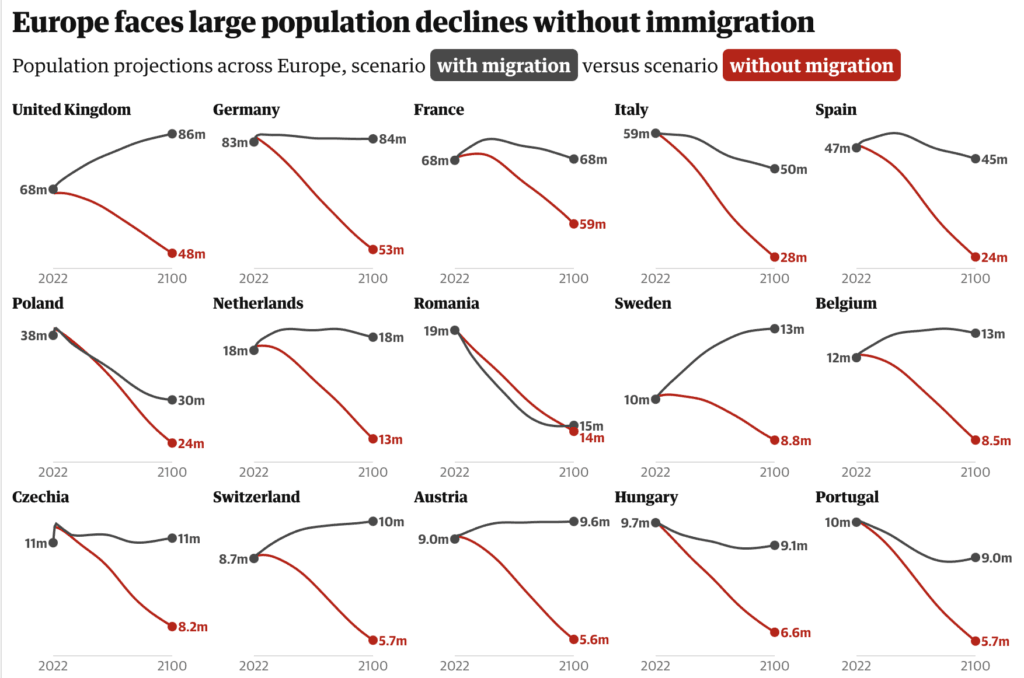
Not only does the total population decline in every scenario, the average age of the population changes when immigration and birthrates drop in tandem. The percentage of the EU’s population that is over 65 will rise from 21% today to 36% in a zero immigration scenario. This means that instead of 4 people working and paying taxes to support the pension and medical costs of one elderly person, this number will shrink to 2 people supporting one retiree. The results of this will be threefold:
- Europeans who are working today will never be able to retire. Pensions and health care for the current generation of workers will most likely not exist
- Tax rates and national debt will continue to rise leading to economic hardship and eventual collapse
- Economic hardship will cause further out-migration from Europe, accelerating population decline in a positive feedback loop.
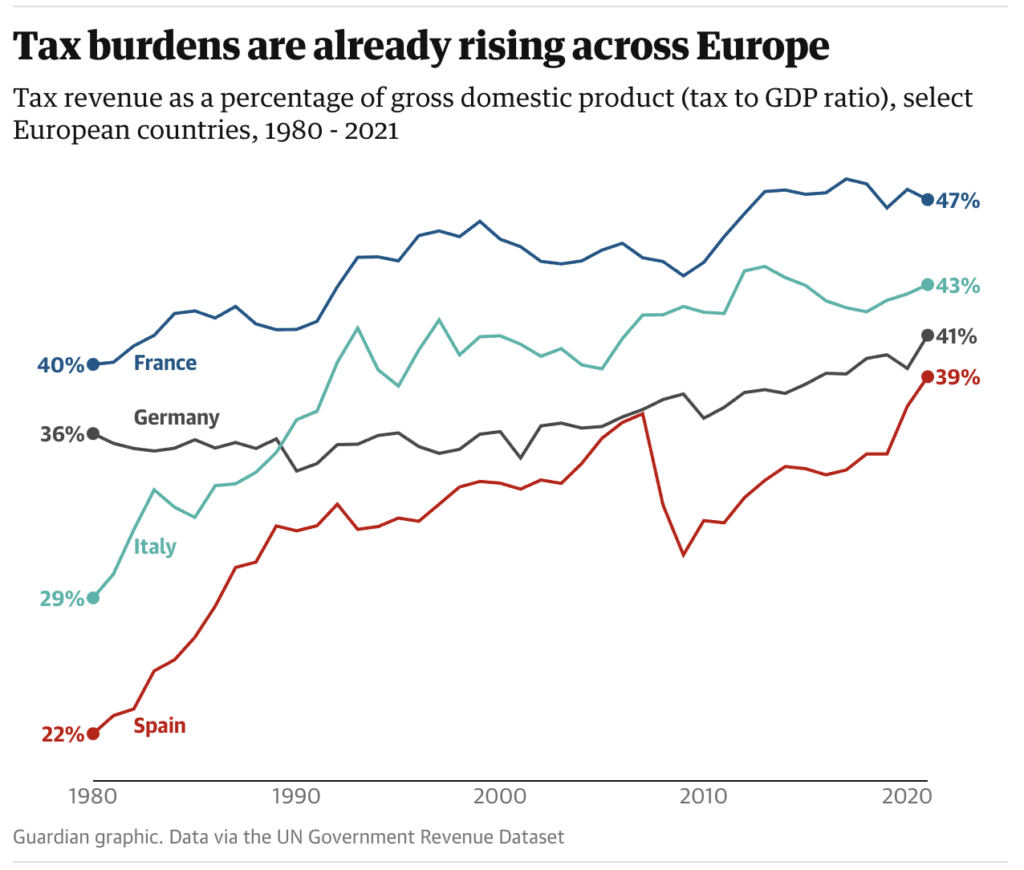
This will return Europe to it’s historical role as a continent of emigrants, where Europeans will flee economic stagnation and political unrest for greener pastures. 52% of Canada’s population claims European decent, and if Canada remains open to immigration as much as Europe continues to close it’s doors to immigration, Canada will continue to benefit from this one-way flow massively. Canada’s incomes are higher and taxes lower.
At a certain tipping point, we are no longer talking about population decrease, but we are talking about the depopulation of massive swathes of Europe.
In Portugal, this is already the case as the interior of the country is full of hundreds of abandoned towns and factories. Spain is suffering a similar issue in it’s rural areas far from the high speed rail lines that feed Madrid and Barcelona. Ghost villages and villages have even become a tourist phenomenon. I have visited quite a few of these abandoned and almost abandoned places. They are beautiful but haunting.